A bathtub that never gets used takes up a surprising amount of space. For many homeowners, a bathtub to shower conversion is less about luxury and more about making the bathroom easier to use every day. It can improve accessibility, open up the room visually, and give you a cleaner, more modern layout that fits how your household actually lives.
This kind of remodel sounds simple on the surface – remove the tub, build a shower, add glass – but the best results come from making a few smart decisions early. The size of the bathroom, the condition of the plumbing, the type of shower base, and the glass enclosure you choose all affect the final look, performance, and cost.
Why homeowners choose a bathtub to shower conversion
The most common reason is practicality. Many families find that the tub in a hall bath or primary bath becomes wasted square footage once kids are older or the home no longer needs a full bathing setup in that space. A shower is often faster to use, easier to step into, and simpler to keep clean.
There is also a design benefit. Replacing a bulky tub with a well-planned shower can make the whole bathroom feel larger. That effect becomes even stronger when the shower is finished with clear glass instead of a shower curtain or heavy framed enclosure. More light moves through the room, tile work stays visible, and the space feels less chopped up.
Accessibility is another major factor. A lower threshold shower can be a better long-term choice for homeowners planning to stay in the home as they age. That said, accessibility needs vary. Some homeowners want a fully curbless entry, while others simply want a lower step-over than a standard bathtub wall. The right solution depends on the user, the structure of the bathroom, and the budget.
What a bathtub to shower conversion usually includes
Most projects start with tub removal and inspection of the surrounding walls, floor, and plumbing. Once the old tub is out, the contractor can see whether there are any hidden issues like water damage, outdated supply lines, or framing repairs that need attention before the new shower goes in.
From there, the shower is rebuilt with a new base or custom shower pan, wall finish, fixtures, waterproofing, and enclosure. Some homeowners choose a prefabricated base for speed and value. Others want a fully tiled shower floor and walls for a more custom look. Neither approach is automatically better. It depends on your priorities.
If your main goal is a clean update with a faster turnaround, a prefabricated base can make sense. If you are investing in a higher-end bathroom and want more control over shape, finish, and drain placement, a custom tile installation may be worth it.
The glass makes a bigger difference than most people expect
In many bathroom remodels, the shower enclosure is what people notice first. That is especially true in a tub-to-shower project, because the new shower often becomes the visual anchor of the room.
A shower curtain is the budget option, but it does not give the same finished appearance. A framed enclosure can be practical and cost-effective, though it has a more traditional look and more metal lines to clean around. For homeowners who want a modern result, frameless or semi-frameless glass is often the best fit.
Frameless glass helps the bathroom feel open and refined. It also shows off tile and fixture choices rather than hiding them. Semi-frameless options can lower cost while still giving a cleaner look than a fully framed system. The best choice comes down to design preference, opening size, and budget.
This is one area where precision matters. Glass should not be treated like an afterthought. Accurate measurement, proper hardware selection, and professional installation are what make the enclosure feel solid, safe, and tailored to the room.
Cost factors that shape the project
One of the first questions homeowners ask is what a bathtub to shower conversion costs. The honest answer is that there is a wide range, because the final price depends on what is behind the walls as much as what you see on the surface.
If the plumbing stays in roughly the same place, the project is usually more straightforward. If drains, valves, or supply lines need to be relocated, labor costs go up. Material choices also matter. A basic acrylic or fiberglass setup costs less than a custom tiled shower with upgraded fixtures and a frameless glass enclosure.
The condition of the existing bathroom plays a role too. If the tub area has hidden moisture damage, mold, or uneven framing, repairs need to happen before the new shower is installed correctly. That is not an upgrade anyone gets excited about, but it is essential for a lasting result.
Glass can also move the budget up or down. Standard panels and doors are generally less expensive than custom-cut glass made to fit a specific opening. But custom glass often gives a much stronger final result, especially in remodels where walls are not perfectly uniform.
Design choices that are worth thinking through early
The most successful conversions are not always the most expensive. They are the ones where the layout, materials, and enclosure all work together.
Start with how the shower will be used. If this is the main bathroom for the home, storage matters. Built-in niches, corner shelves, or bench seating may be useful. If this is a compact guest bath, keeping the footprint open may be more important than adding features.
Then think about maintenance. Large-format wall panels or tile with minimal grout lines are easier to clean than detailed mosaic patterns. Clear glass looks elegant, but it may show water spots more quickly if the bathroom has hard water. Some homeowners are happy to squeegee after each use. Others prefer low-maintenance choices that hide spotting a bit better.
Door style matters as well. A swinging glass door can feel upscale and comfortable in a larger bathroom, but it needs proper clearance. In tighter spaces, a sliding configuration may be the better option. This is why field measurement and planning matter so much. What looks right in a showroom is not always what works best in your actual room.
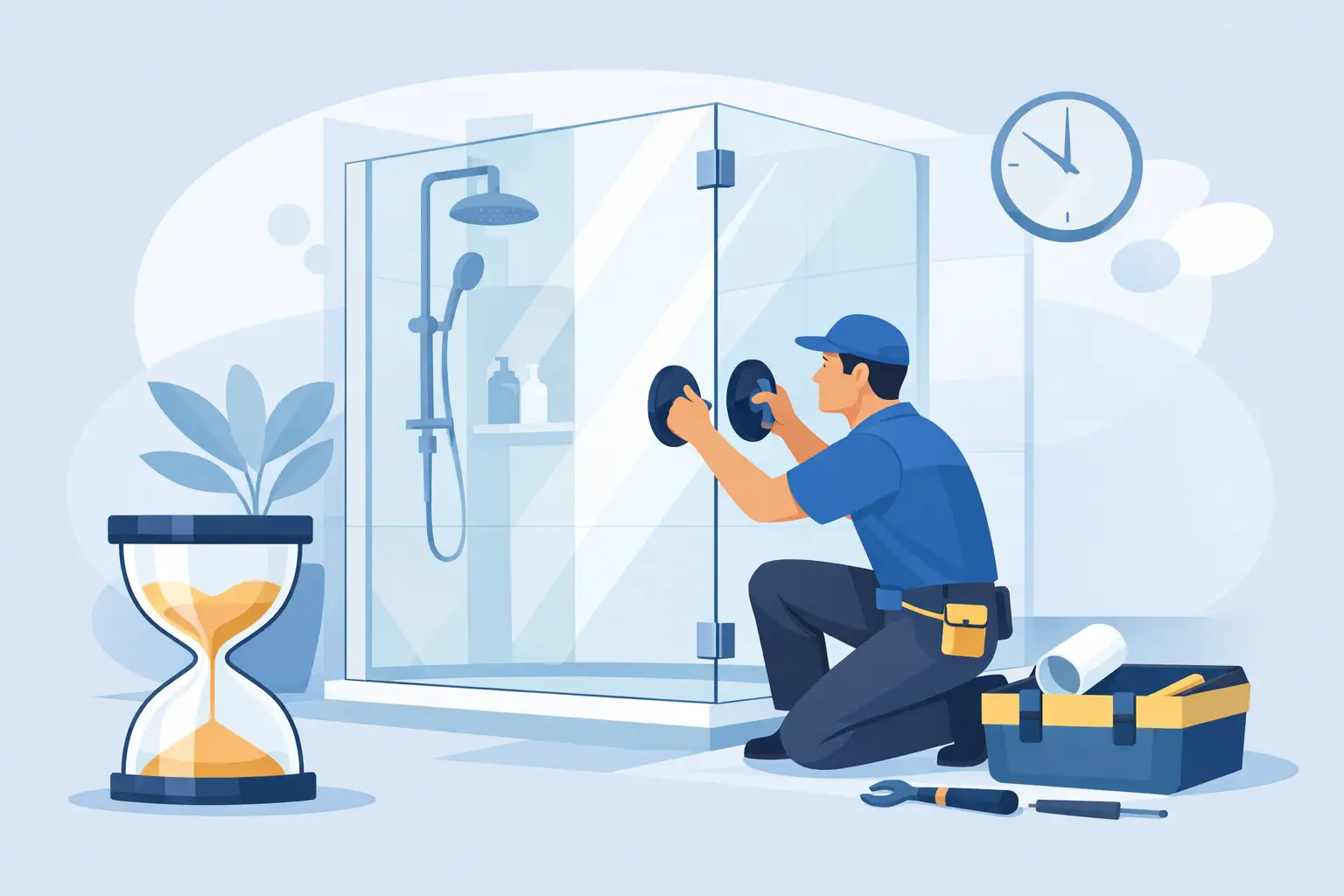
How long does a bathtub to shower conversion take?
Timelines depend on the complexity of the remodel. A more basic conversion with straightforward plumbing and standard materials can move relatively quickly. A custom shower with tile work, waterproofing, specialty glass, and finish carpentry naturally takes longer.
Delays often come from hidden conditions, custom fabrication lead times, or changes made mid-project. Homeowners can help keep things on track by finalizing selections before demolition starts. That includes the shower base, wall finish, fixtures, hardware finish, and enclosure style.
For glass in particular, measurements are usually taken after the shower opening is complete and finished. That is normal. Custom glass installation is one of the last steps because it needs to fit the final conditions exactly.
When a conversion may not be the right move
A bathtub to shower conversion is a strong upgrade for many homes, but there are times when it is worth slowing down. If the house has only one bathroom and no other tub, removing the only bathtub can affect future resale appeal for some buyers. Families with young children may still prefer to keep one tub somewhere in the home.
There are also situations where the bathroom layout limits what you can do without major reconstruction. If you want a fully curbless shower, the floor structure needs to allow proper slope and drainage. It is possible in many homes, but not always without added cost.
That is why a good contractor does not push the same solution for every customer. The right recommendation should reflect how you use the home now, what you want from the remodel, and how long you plan to stay there.
Getting the result to feel custom, not cookie-cutter
Even when the footprint stays similar, the finish details can make the new shower feel completely different from the old tub area. Consistent tile alignment, clean caulk lines, solid hardware, and properly fitted glass all contribute to that custom look.
Homeowners often focus first on tile color or fixture finish, but fit and installation quality are what give the bathroom its polished appearance. That is especially true with glass. A well-installed shower enclosure should feel sturdy, look balanced, and match the room instead of fighting it.
For homeowners in North and Central New Jersey, working with a contractor who understands both the remodel side and the custom glass side can make the process a lot smoother. Companies like Vlad’s Mirror & Glass bring that specialized experience to the enclosure portion of the project, which helps when the goal is a finished shower that looks clean, modern, and built for the space.
If you are thinking about replacing a tub with a shower, the best next step is not guessing from photos online. It is getting a clear, honest assessment of your bathroom, your options, and the kind of glass enclosure that will make the upgrade feel complete.